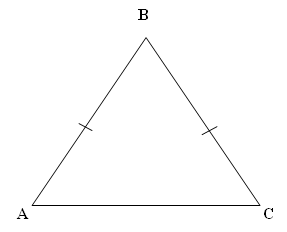
 Our April 16, 2009 PSSA math challenge problem involved geometry in solving an angle of an isosceles given one of the other angles. Answer is C.
--Mr. Bujak
 Our April 16, 2009 PSSA math challenge problem involved geometry in solving an angle of an isosceles given one of the other angles. Answer is C.
 Our April 1, 2009 PSSA math challenge problem winner is Shkeem Brown. This geometry problem involved solving an expression involving a triangle's interior angles and 3 exterior angles. Answer is C.
 Our March 13, 2009 PSSA math challenge problem winner is Jolesha Cruickshank. This geometry and algebra problem involved using algebra with properties of a parallelogram. Answer is B.
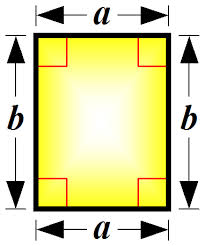 Our March 12, 2009 PSSA math challenge problem winner is Tishell Wessells. This geometry problem involved relating a rectangle's perimeter and area with algebraic constructs. Answer is C.
 Our March 9, 2009 PSSA math challenge problem winner is Tyler Linder. This geometry problem involved properties of a midpoint. Answer is C.
 Our March 6, 2009 PSSA math challenge problem winner is Nadine Redic. This geometry problem involved finding the lines of symmetry (reflective symmetry) on a regular pentagon. "Regular" means all sides are the same. "Pentagon" means a 5-sided polygon. Answer is D.--Mr. Bujak
 Our March 5, 2009 PSSA math challenge (algebra) problem involved extrapolating a data point from a table of data values given t
 hat the fact that the data is inversely related. Answer is D.--Mr. Bujak
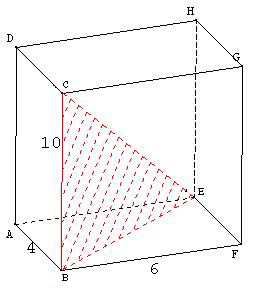 Our March 4, 2009 PSSA math challenge problem winner is Nadine Redic. This geometry problem involved finding the length of the body (or space) diagonal of a rectangular prism. Note that this is the Pythagorean Theorem in 3 dimensions. Answer is D.
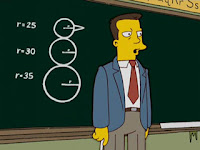 Our February 27, 2009 PSSA math challenge problem winner is Ernest McCollum. This geometry problem asked for the area of the circle given the circumference of the circle. Answer is B.
 Our February 23, 2009 PSSA math challenge problem winner is Shkeem Brown. This geometry/algebra problem involved the application of the Pythagorean Theorem to solve for a leg of a right triangle. Answer is D.
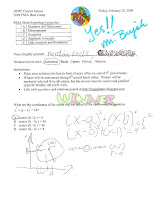 Our February 20, 2009 PSSA math challenge problem winner is Nadine Redic. This algebra/geometry problem involved knowing and applying the equation of a circle. Answer is A. See also: conic sections.
 Our February 17, 2009 PSSA math challenge problem winner is Shkeem Brown. This geometry/algebra problem involved solving areas of a triangle and a similar area for a square. Answer is A.
 Our February 13, 2009 PSSA math challenge problem winner is Tishell Wessells. This geometry/algebra problem involved approximating the length of a line segment which was part of a figure involving squares and right triangles. Answer is A.
 Our February 3, 2009 PSSA math challenge problem winner is Tiffany Swan-Henley. This geometry problem tested your 3D visual abilities, by rotating (or revolving) a triangle about a fixed x-axis to result in a cone. Answer is A.
 Our January 30, 2009 PSSA math challenge problem winner is Maryah Span. This geometry problem needed you to set up a proportion since there are similar triangles and cross multiply to solve for the length of the unkn0wn triangle side. Answer is B.
 Our January 23, 2009 PSSA math challenge problem winner is Nadine Redic. This geometry problem asked how many small cubes of a given size would fit into the volume of a larger right rectangular prism with given dimensions. Answer is B. See also: dimensional analysis.
 Our January 21, 2009 PSSA math challenge problem winner is Maryah Span. The geometry problem involved a triangle's interior angles, exterior angles, sum of interior angles = 180, supplementary angles. Maryah took a novel approach of estimating the angle measures knowing all the sum of the interior angles of a triangle = 180. She also knew the indicated exterior angle and the adjacent interior angles are supplementary (sum = 180). Knowing all this, Maryah simply crunched the numbers to come up with a quick solution.
 Our January 14, 2009 PSSA math challenge problem winner is Ashley Alston.
 Our January 13, 2009 PSSA math challenge problem winner is Cindi Gil. Since this was multiple choice, Cindi did a quick approximate measurement of one side of the regular (all side lengths are equal) hexagon at about 3 cm. Since there are 6 sides in a hexagon, Cindi added six 3's to get 18 cm for the perimeter. She picked the closest answer since her initial measurement of one side was only approximate.
